
Asylum Escape
Introduction
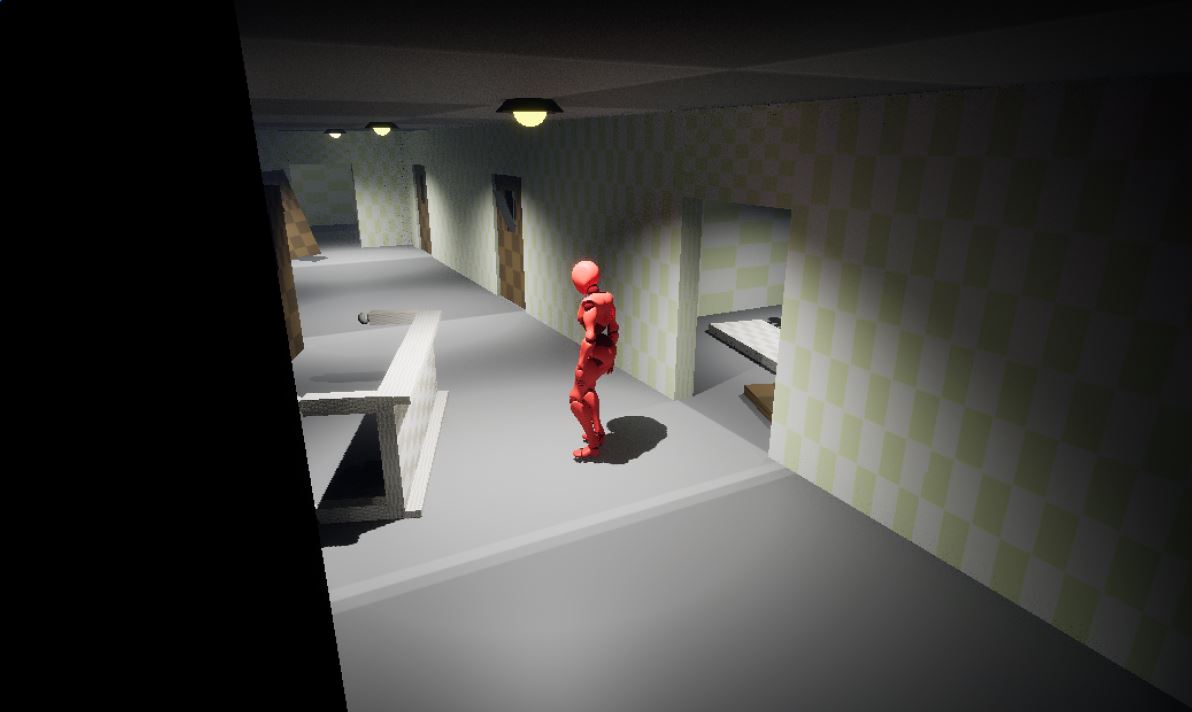
Asylum Escape is a fixed-camera horror experience inspired by the cinematic framing and tension of Resident Evil 2. While overall progression is linear, the system supports branching paths, optional objectives, and layered exploration to encourage player agency within a structured framework. Built as a solo project over one month, the design centers on how camera perspective, objective structure, and environmental systems work together to shape pacing and difficulty.
This project challenged me to think about camera perspective as a gameplay system rather than just a visual choice. I designed the fixed-camera implementation to control information flow, influence player decision-making, and heighten vulnerability. By treating framing, navigation, and progression as interconnected systems, I explored how mechanical constraints can actively shape player psychology and tension.
Fixed Camera System
The camera system is driven by trigger-based volumes that dynamically switch between fixed viewpoints as the player moves through the environment. Each camera is strategically positioned to control sightlines, conceal threats, and reinforce spatial tension. Transitions are handled seamlessly to maintain player orientation while preserving the deliberate disorientation characteristic of classic survival horror. By treating camera switching as a core gameplay system rather than a visual effect, the mechanic directly influences navigation, threat awareness, and overall pacing.
Movement Smoothing
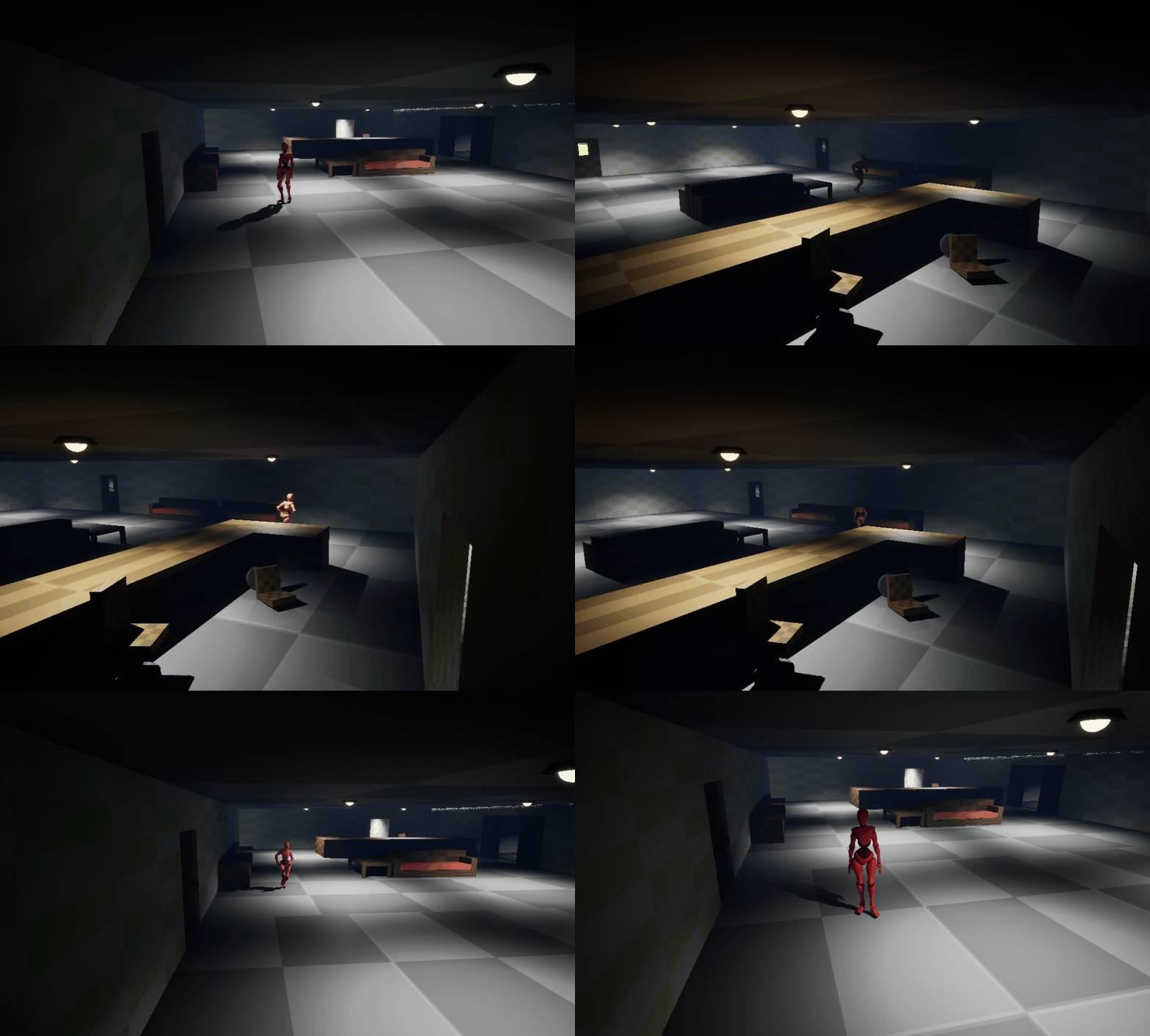
Because movement input in Asylum Escape is calculated relative to the active camera’s rotation, switching between fixed viewpoints introduced directional inconsistencies. When transitioning between cameras facing opposite directions, holding the same movement input would cause the player character to abruptly reverse direction. To address this, I implemented a movement smoothing system that temporarily preserves the previous camera’s rotation for input calculations until the player provides new directional input. This ensures consistent forward momentum through transitions, reducing player frustration while maintaining the intentional tension of fixed-camera navigation. The result is a system that preserves control clarity without compromising the design constraints of the fixed perspective.
Enemy AI
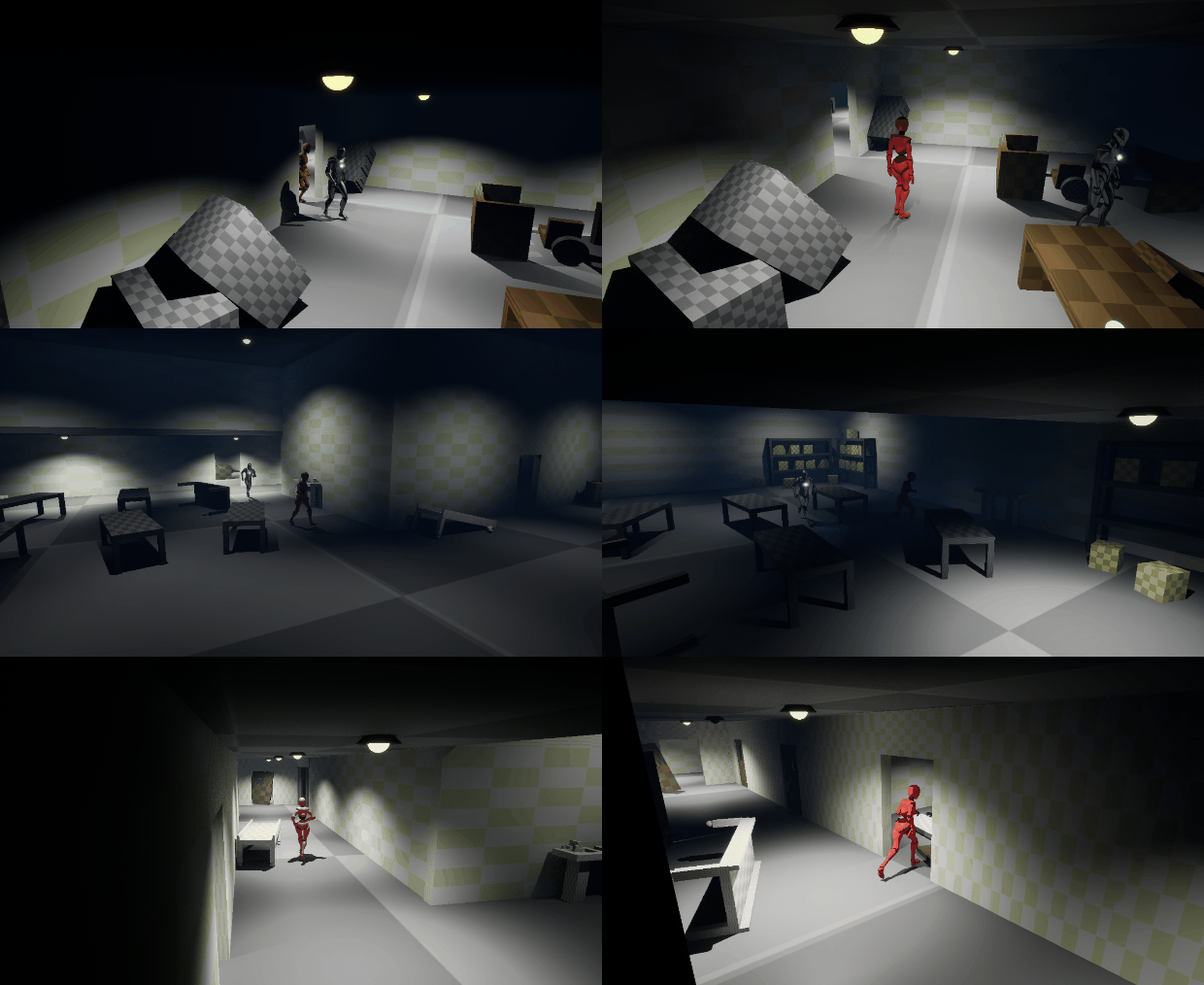
The enemy AI in Asylum Escape is built around a state-based system that governs behavior transitions such as patrolling, investigating, chasing, and searching. Each state defines specific movement logic, perception checks, and response priorities, allowing the AI to react dynamically to player actions. Transitions are triggered through visibility checks, proximity thresholds, and timed conditions, creating predictable rules that still allow for emergent tension. By structuring the AI around clearly defined states, I was able to balance readability and threat escalation, ensuring encounters feel fair while maintaining sustained suspense.
Playtester Data
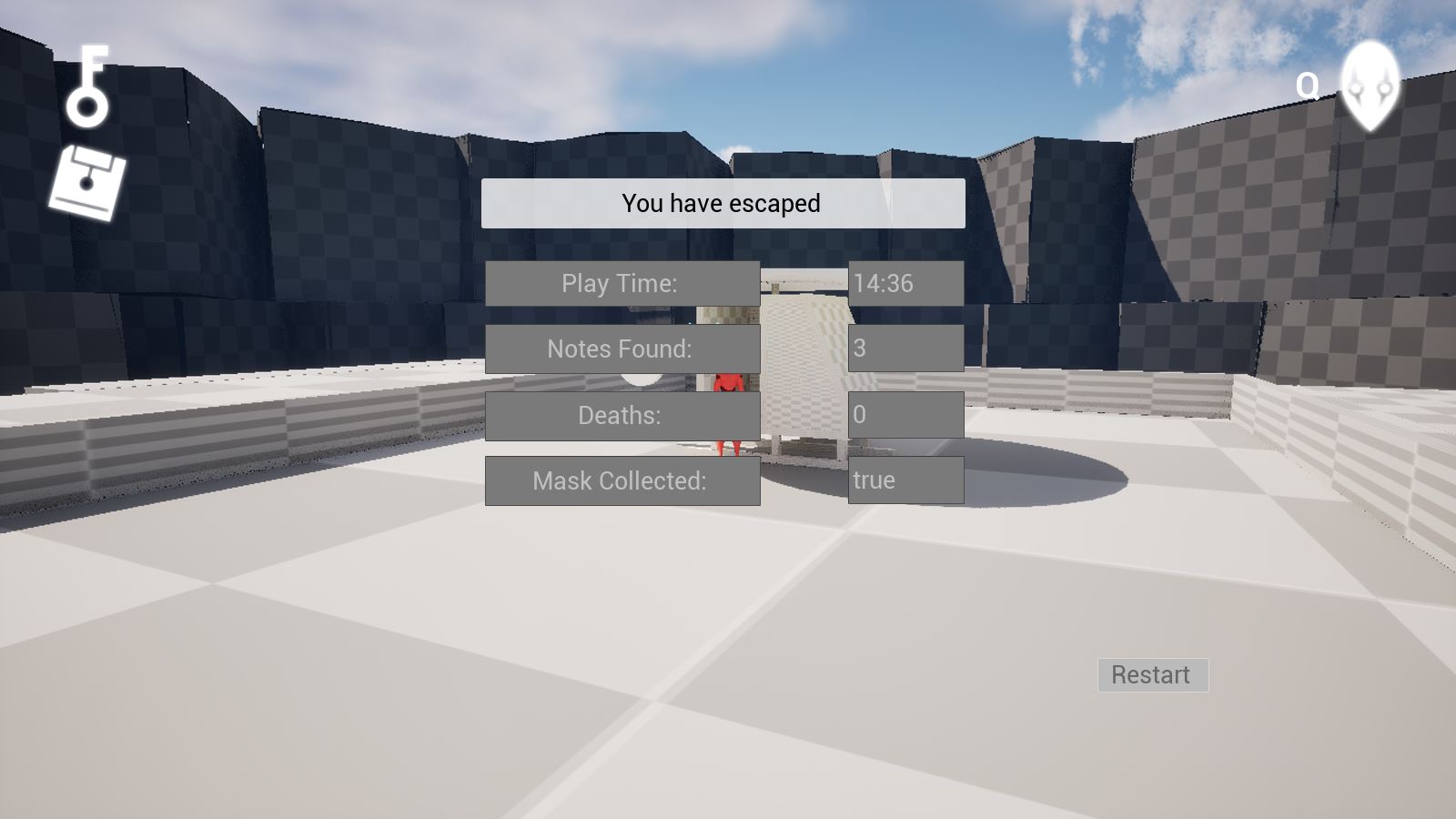
Asylum Escape was playtested by a small group of players. They were given only a story synopsis and a brief explanation of the controls, with no further guidance. During testing, the game tracked metrics such as completed objectives, session duration, and failure count. I observed the sessions firsthand, noting player reactions and issues. Afterward, testers provided feedback on their experience. This process gave me valuable insights into my level design’s effectiveness and highlighted areas for improvement. While only one round of playtesting was conducted, further iterations would help refine the game’s mechanics and design.
Conclusion
Asylum Escape represents an exploration of how mechanical systems shape player experience. From camera control and movement smoothing to state-driven AI and objective structure, each component was designed not in isolation but as part of a cohesive framework built to influence pacing, tension, and player decision-making. The project reinforced my belief that constraints, when treated intentionally, can become powerful design tools.
Through this solo development process, I strengthened my ability to design interconnected gameplay systems, iterate based on player data, and balance technical implementation with experiential goals. Asylum Escape challenged me to think beyond surface mechanics and consider how every system contributes to atmosphere and player psychology