Gravity Test
Introduction
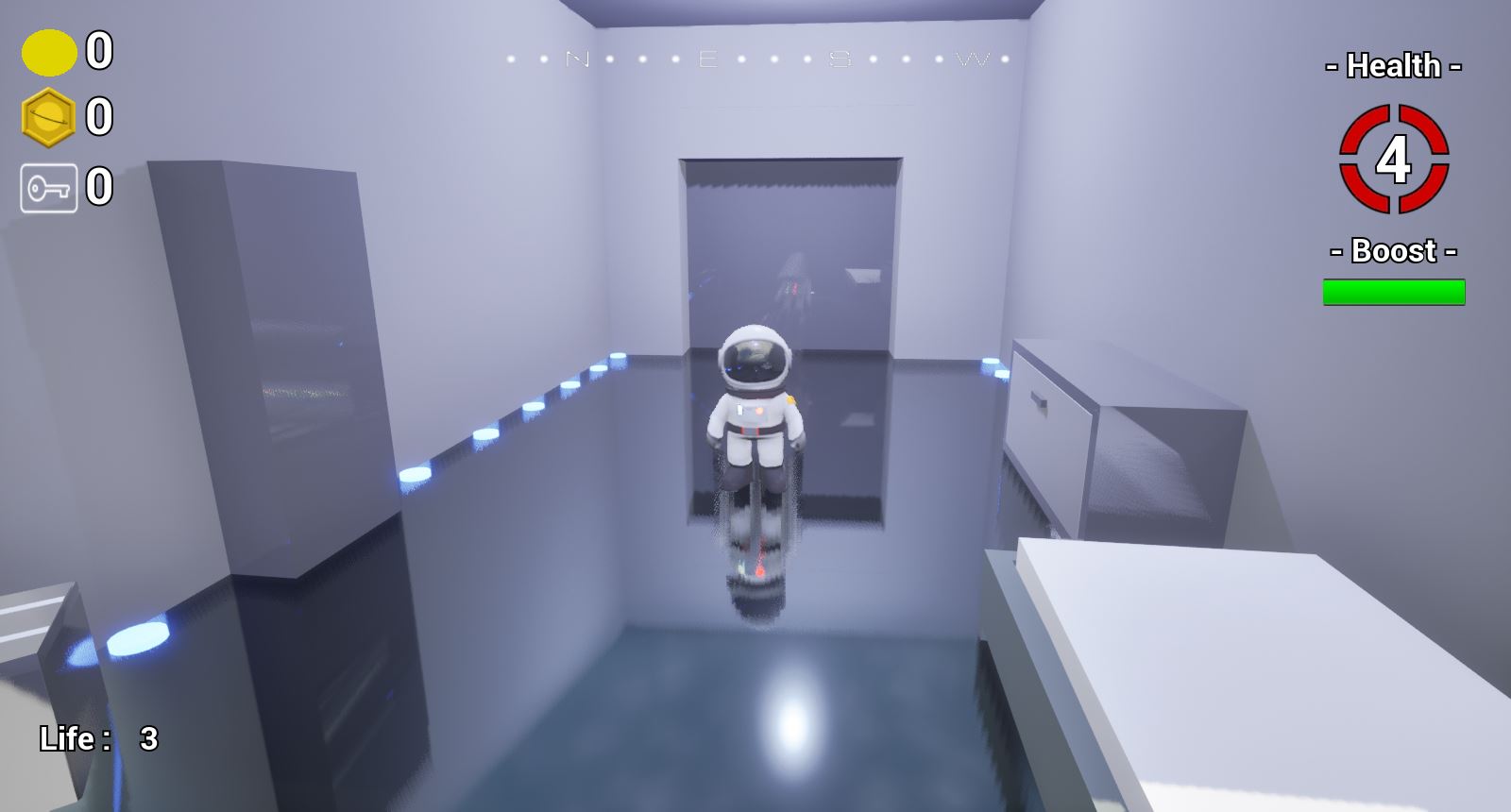
Gravity Test is a 3D platformer built in Unreal Engine 5 that explores gravity-based traversal across planetary environments. Inspired by titles like Super Mario Galaxy, the game challenges players to navigate rotating planetoids and physics-defying terrain by manipulating gravity in real time. The design emphasizes spatial awareness, momentum, and precision platforming, encouraging players to think creatively as they shift orientation between surfaces.
The game was developed by a four-person team. My role as Systems Designer focused on implementing core mechanics, including gravity direction control, character movement systems, and jet-assisted traversal. Our collaborative approach, paired with structured version control through Perforce, allowed us to iterate quickly and integrate gameplay with level design and visual storytelling. The end result was a polished and engaging prototype that showcased technical creativity and cross-disciplinary teamwork. Gravity Test is publicly available to play on itch.io
Gravity Mechanics
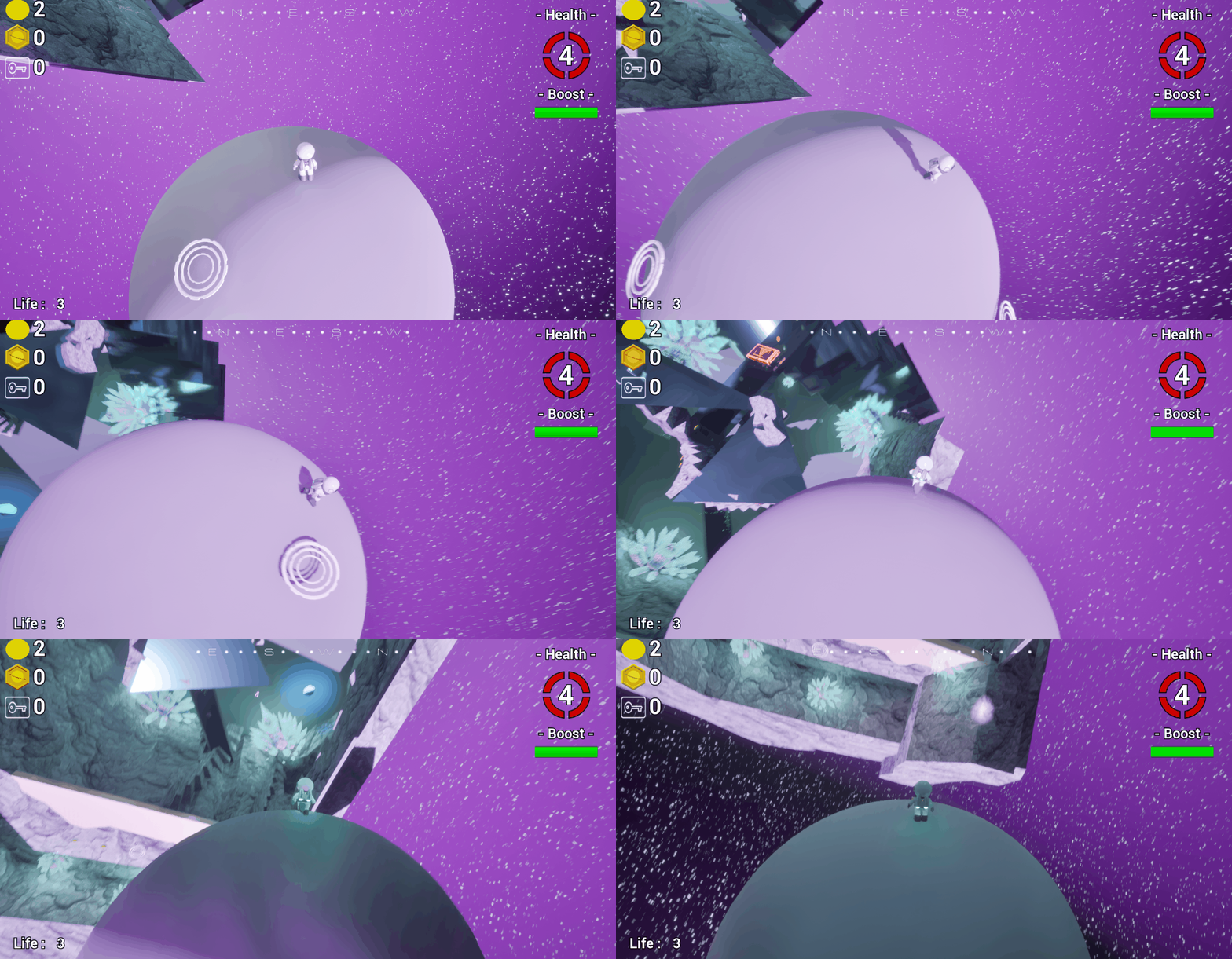
The core gravity system in Gravity Test allows the player to traverse spherical planetoids and seamlessly shift orientation as they move across curved surfaces. This was achieved by constantly recalculating the player’s “down” vector based on the surface normal beneath them, aligning gravity direction dynamically with the planet’s shape. Custom movement logic was implemented to replace standard Unreal Engine character movement, ensuring smooth transitions when walking across terrain that wraps in multiple directions. The system also accounted for jumping, falling, and interacting with different gravity zones, creating a fluid and intuitive traversal experience. The goal was to preserve player control while maintaining immersion, and careful attention was given to movement responsiveness, camera orientation, and friction handling to deliver a gameplay experience that felt both grounded and exploratory.
Jet Booster Mechanic
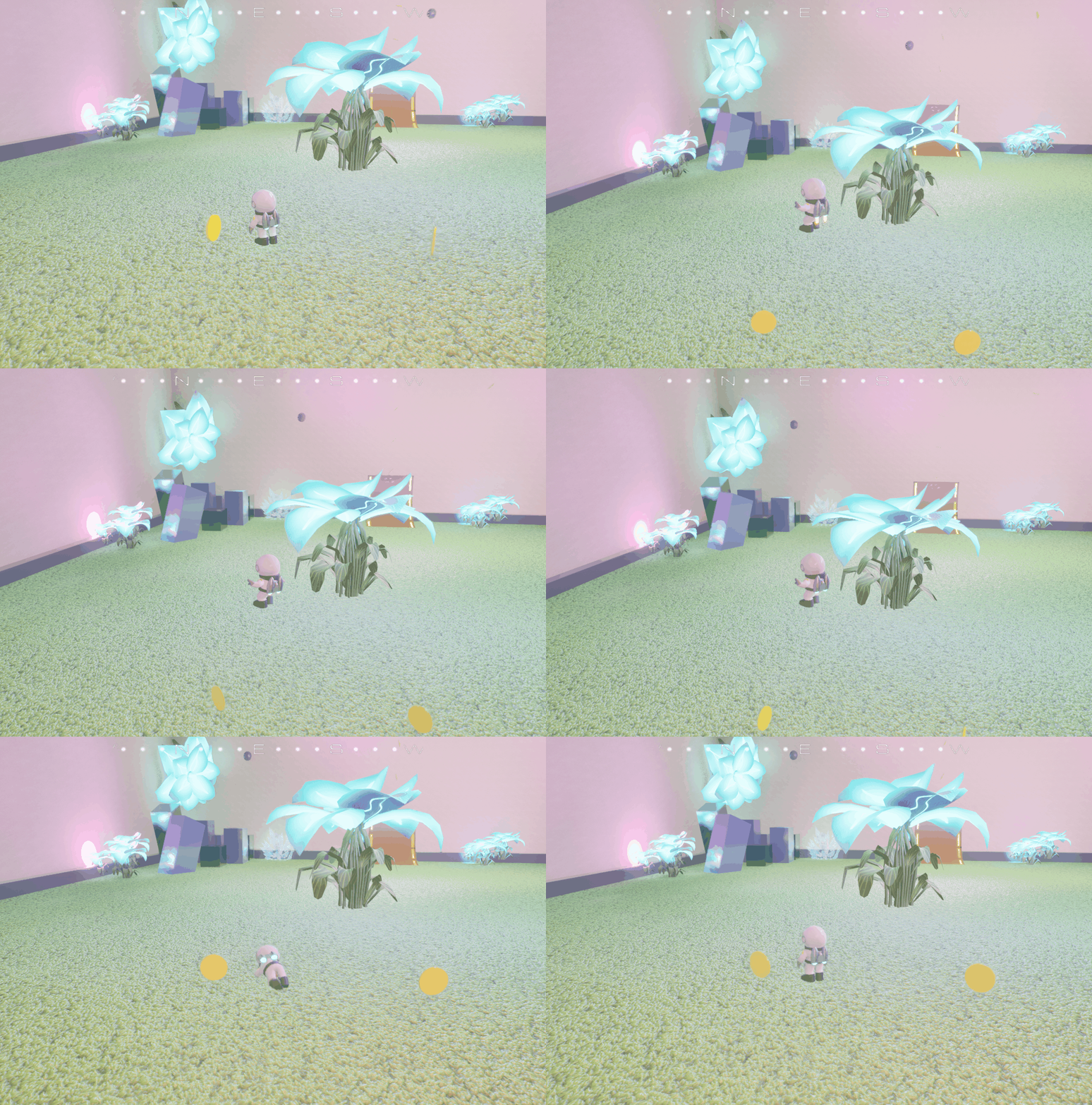
The jet booster system was designed to provide players with an additional layer of control and momentum during traversal, especially when transitioning between gravitational surfaces or clearing larger gaps. Activated mid-air, the booster temporarily propels the player upward in their current gravity direction, taking into account both local gravity and movement state. To ensure consistent behavior across various frame rates, the system was built using delta-time calculations, allowing force application to remain stable regardless of performance fluctuations. The mechanic also included cooldown logic and limited fuel capacity to encourage strategic use. Integrated closely with the gravity system, the booster became a key part of the platforming loop, enabling more dynamic movement and expanding level design possibilities.
Cross-Disciplinary Collaboration
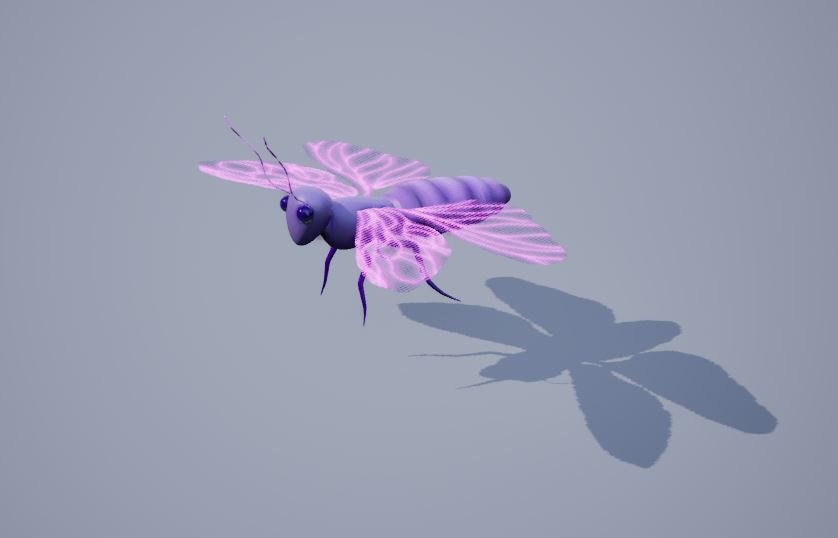
Gravity Test was developed through close collaboration between the core development team and a group of three talented artists who were responsible for creating all of the 3D models and textures used in the game. Effective communication between disciplines was essential to ensure that assets met gameplay and technical requirements. I worked directly with the artists to integrate their work into the game, aligning models with collision volumes, adjusting material setups, and ensuring performance-friendly implementation. This collaboration required careful asset planning, feedback loops, and regular check-ins to keep visual and mechanical elements in sync. The result was a cohesive game world where visual design and gameplay systems supported one another seamlessly.
Project Management with Jira
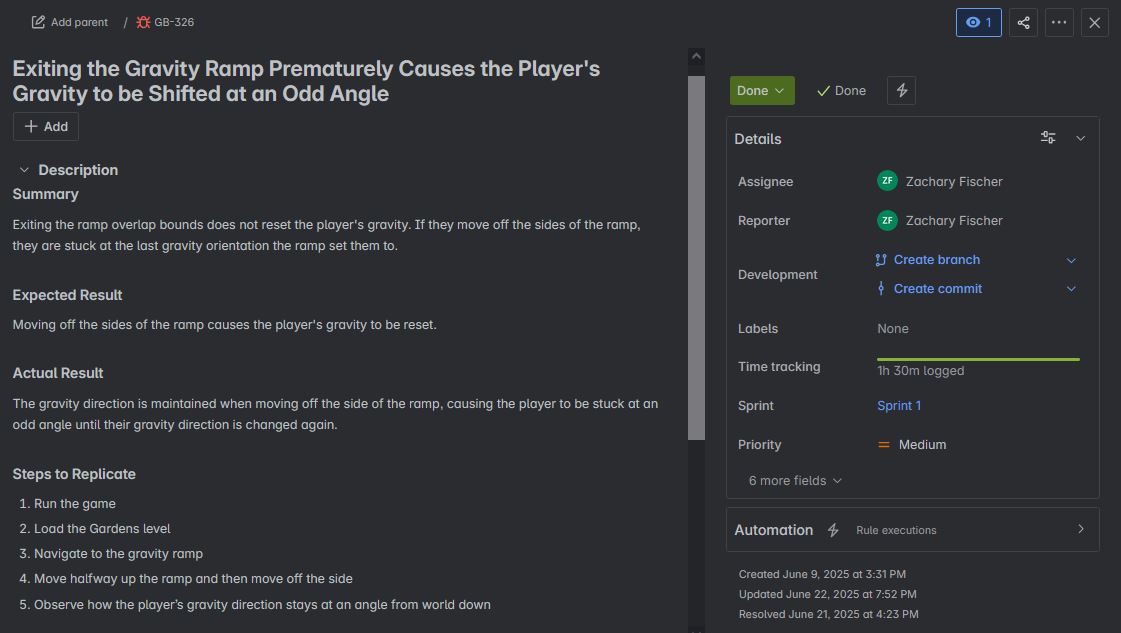
To manage our workflow and maintain consistent progress, we used Jira to organize and track feature development throughout the project. Each gameplay system, bug fix, and content integration task was broken down into individual tickets with clear descriptions, deadlines, and priority levels. This allowed the team to maintain visibility over active work, identify blockers early, and adjust priorities as needed. Sprint planning and daily check-ins were supported by Jira’s task board, which helped us stay aligned across both design and art pipelines. Utilizing Jira not only improved team communication and accountability but also ensured we stayed on track to meet our development milestones.
Conclusion
Gravity Test represents a successful collaboration between technical and artistic disciplines to create a gravity-defying 3D platforming experience. With its core mechanic inspired by titles like Super Mario Galaxy, the game challenged players to explore spherical environments through dynamic gravity shifts, jet-assisted traversal, and responsive movement systems. As Systems Designer, I was responsible for implementing the custom gravity logic, developing the jet booster feature, and ensuring smooth player control across a variety of surface types and orientations. These systems were closely tied to the design of the levels, making tight coordination with the rest of the team essential.
Our use of Unreal Engine 5 and Blueprint scripting allowed us to rapidly prototype and refine mechanics, while tools like Jira and Perforce provided structure and efficiency in both asset integration and version control. Collaborating with a dedicated group of artists further elevated the project, resulting in a polished and visually cohesive world. Regular communication across disciplines ensured that gameplay systems and visual assets supported one another effectively. Overall, Gravity Test was an opportunity to tackle complex technical challenges, refine cross-team workflows, and deliver a unique and immersive platformer experience, one that reflects both creative ambition and strong team execution.